Carpet Area vs Super Built Up Area Bangalore: What Buyers Really Get

Two homes listed at the same size can feel very different once you walk in. The reason usually lies in carpet area vs super built up area Bangalore...
Two homes listed at the same size can feel very different once you walk in. The reason usually lies in carpet area vs super built up area Bangalore listings quote, and in how much common space is loaded onto each home. Understanding the difference helps you compare prices fairly, spot inflated listings, and judge how much usable space you are actually paying for. Below, we explain each term, the definition set by the real estate regulator, how to calculate loading and efficiency, and what the numbers look like for real homes at Misty Waters in Hebbal.
The Three Areas Explained
Property listings use three main measures:
Carpet area — the usable floor area inside the home's walls
Built-up area — carpet area plus the thickness of the walls, and often exclusive balconies
Super built-up area (SBA), also called saleable area — built-up area plus a share of common spaces such as lobbies, lifts, staircases, corridors, and clubhouses
Resale prices in Bangalore are usually quoted on SBA, which is why the carpet area matters so much when comparing value.
RERA Carpet Area Definition
The RERA carpet area definition is set by the Real Estate (Regulation and Development) Act. It defines carpet area as the net usable floor area of an apartment, excluding the area covered by external walls, service shafts, exclusive balconies or verandahs, and exclusive open terraces, but including the area covered by internal partition walls. Developers registering new projects with the Karnataka Real Estate Regulatory Authority (RERA) must state carpet area on this basis, which makes comparisons between projects far easier than before.
Loading Factor in Apartments
The loading factor in apartments measures how much common area is added to the carpet area to reach SBA. There are two common ways to express it: as the extra percentage over carpet area, or as the share of SBA that is actually usable, often called efficiency.
Loading over carpet = (SBA − carpet area) ÷ carpet area
Efficiency = carpet area ÷ SBA
A lower loading factor, or a higher efficiency, means more of what you pay for is usable space inside your home.
Carpet Area vs Super Built Up Area Bangalore: Real Examples
The Vista Tower at Misty Waters publishes both figures for every unit type:
Unit | Type | SBA | Carpet area | Efficiency |
|---|---|---|---|---|
Q | 2 BHK + Study | 1,339 sft | 946 sft | ~71% |
Q1 | 2 BHK + Study | 1,339 sft | 950 sft | ~71% |
R | 3 BHK | 1,615 sft | 1,084 sft | ~67% |
S | 3 BHK | 1,693 sft | 1,129 sft | ~67% |
For Type Q, the loading over carpet works out to roughly 42%; for Types R and S, roughly 49–50%. An efficiency around 70% is considered good for a high-rise with clubhouses and generous common areas. Karnataka RERA records for the tower list a total carpet area of 11,658 sq m across 119 homes, plus 910 sq m of exclusive balcony area.
Why Common Areas Are Included
Buyers sometimes see loading as a hidden cost, but common areas deliver real value: lobbies, lifts, stair cores, basements, clubhouses, and landscaped grounds. At Misty Waters, those include two clubhouses, a swimming pool, three racquet courts, and around 70% open space. The key is to compare like with like. A project with minimal amenities should show a higher efficiency, while one with extensive facilities may reasonably carry more loading.
How to Compare Prices Fairly
Convert every listing to a price per sft of carpet area before comparing. Divide the total price by the carpet area rather than the SBA. This simple step often reveals that a cheaper-looking price per sft of SBA is actually more expensive per usable sft, or the other way round. Our cost sheet guide shows how the total price is built up, and our guide on how to read an apartment floor plan helps you judge how well that carpet area is laid out.
A Worked Comparison
Take two 3 BHK homes, each listed at 1,650 sft of SBA and the same total price. The first has a carpet area of 1,100 sft, an efficiency of about 67%. By contrast, the second has a carpet area of 1,000 sft, about 61%. On paper they cost the same per sft, but the first gives you 100 sft more usable space, roughly the size of a small bedroom. Divide each price by its carpet area and the difference becomes clear. Over a lifetime in the home, that extra room matters more than any headline rate.
What to Ask Sellers and Developers
Ask for both SBA and carpet area in writing, and check them against the RERA record where available. For resale homes, compare the figures in the sale deed with those in the original sale agreement. If a listing quotes only one number, ask which it is. See the floor plans at Misty Waters for full room dimensions; resale prices are shared on request.
Related reading: How to read an apartment floor plan | Cost sheet: what a resale buyer actually pays | Configurations and prices on the homepage | Talk to our team
FAQs
What is the difference between carpet area and super built-up area?
Carpet area is usable space inside the walls; super built-up area adds walls and a share of common areas.How does RERA define carpet area?
As net usable floor area, excluding external walls, service shafts, and exclusive balconies or terraces, but including internal partition walls.What is a good efficiency ratio?
Around 70% is considered good for a high-rise with generous amenities.What is the efficiency of the Vista Tower homes?
About 71% for the 2 BHK + Study homes and about 67% for the 3 BHK homes.How should I compare prices?
Divide the total price by the carpet area to compare usable space fairly.
Related Articles

Living Near Nagavara Lake Lumbini Gardens: The Green Edge of Kempapura
Open water is rare along the Outer Ring Road (ORR), which is why the stretch around Nagavara Lake stands out. Living near Nagavara Lake Lumbini...
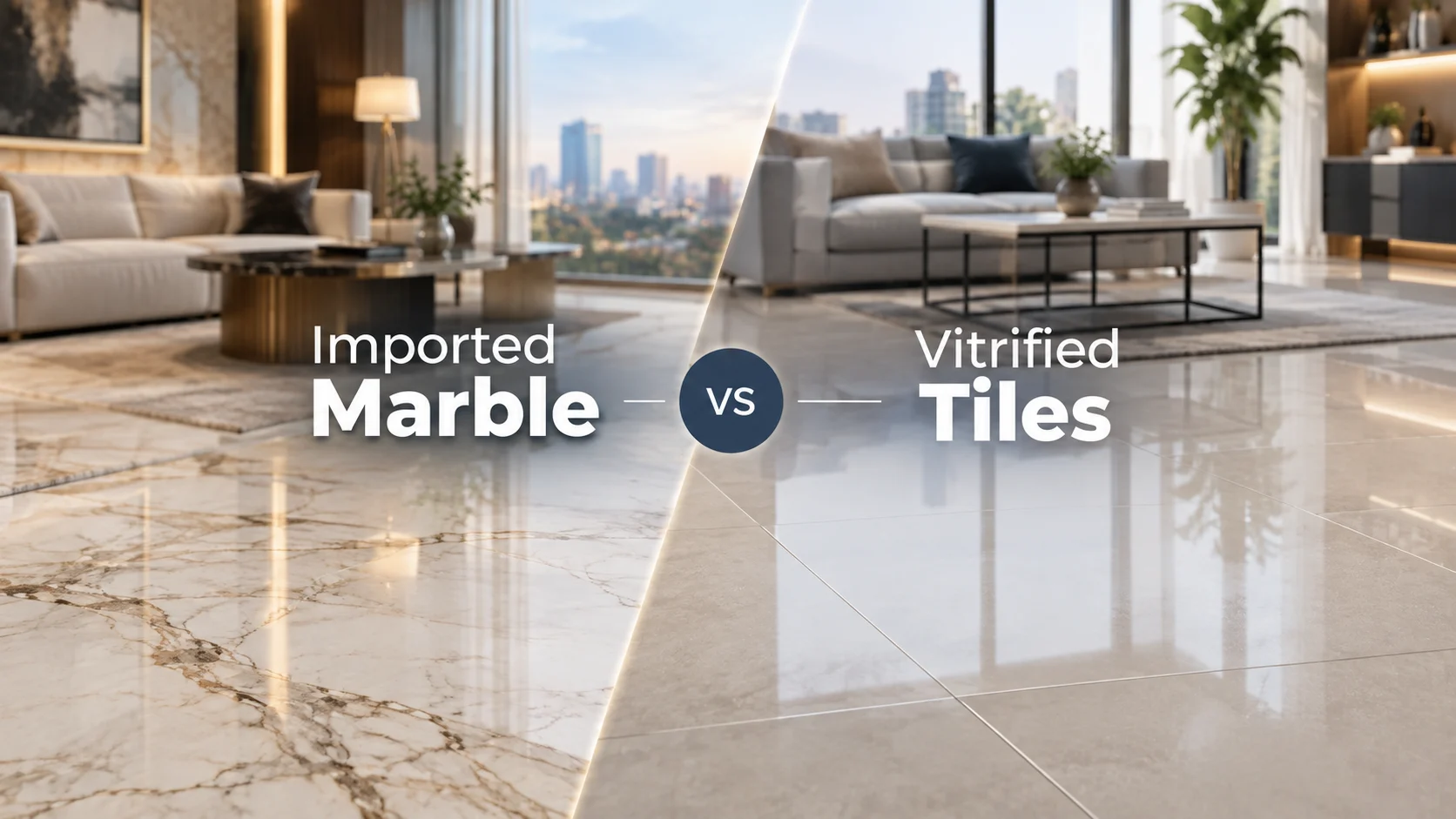
Imported Marble vs Vitrified Tiles for Flats: Which to Choose
Flooring sets the tone of a home more than almost any other finish, and it is one of the hardest to change later. The imported marble vs vitrified...

Listed Real Estate Developer Benefits for Buyers: Why Listing Matters
When two developers offer similar homes, buyers often look for a tiebreaker, and a stock-market listing is one worth understanding. The listed real...

How Will Metro Affect Property Prices in Hebbal?
Metro lines change how people move, and over time they change where people want to live. With the Blue Line airport corridor under construction...