Imported Marble vs Vitrified Tiles for Flats: Which to Choose
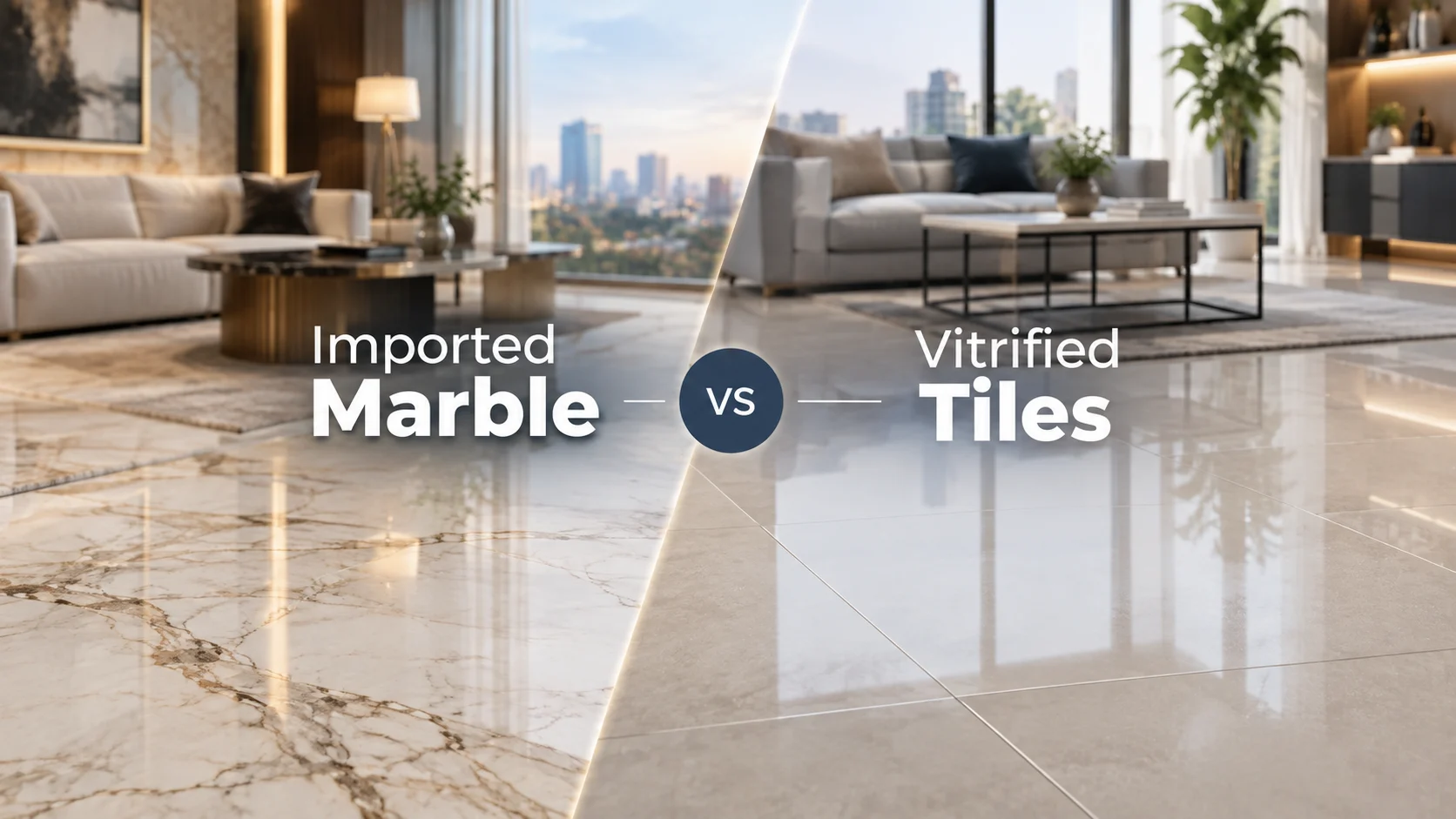
Flooring sets the tone of a home more than almost any other finish, and it is one of the hardest to change later. The imported marble vs vitrified...
Flooring sets the tone of a home more than almost any other finish, and it is one of the hardest to change later. The imported marble vs vitrified tiles for flats question comes up in almost every premium purchase, because both look polished on day one but age very differently. Many premium homes, including those at Misty Waters in Hebbal, combine materials: marble in living spaces, laminated wood in bedrooms, and tiles in service areas. Below, we compare the options on look, durability, maintenance, and practicality, so you know what to expect from each.
How the Two Materials Differ
Marble is a natural stone, cut from quarries and polished into slabs. Every slab has unique veining and colour, which gives a room character but also means patches can vary. It is relatively soft and porous, so it needs sealing and occasional polishing.
Vitrified tiles are manufactured by firing clay and minerals at high temperatures, which produces a dense, low-porosity surface. The process makes them highly resistant to water absorption, which is why they are widely used in kitchens, utilities, and high-traffic areas across Indian homes. They come in consistent sizes, colours, and patterns, including designs that imitate marble, and they resist stains and scratches well.
Imported Marble vs Vitrified Tiles for Flats: Side by Side
Factor | Imported marble | Vitrified tiles |
|---|---|---|
Look | Natural veining, unique slabs, warm depth | Uniform, wide range of designs |
Durability | Can scratch, chip, and etch with acids | Hard, scratch- and stain-resistant |
Maintenance | Needs sealing and periodic polishing | Low; regular cleaning is enough |
Joints | Fewer visible joints with large slabs | Grout lines between tiles |
Repair | Can be re-polished to remove wear | Damaged tiles must be replaced |
Feel | Cool underfoot, premium feel | Cool underfoot, consistent |
Neither is simply better. Marble offers a premium look that can be restored by polishing; vitrified tiles offer easy, predictable upkeep.
Marble Flooring Maintenance
Good marble flooring maintenance keeps the stone looking its best for decades. Wipe spills quickly, especially acidic ones such as lemon juice, vinegar, or wine, which can dull the surface. Use pH-neutral cleaners rather than harsh chemicals. Place mats at entrances to catch grit, and use felt pads under furniture. Every few years, depending on traffic, a professional polish restores shine and removes fine scratches. Sealing helps resist stains.
For resale buyers, the condition of marble floors is a useful sign of how carefully a home has been kept. Dull patches and etching are fixable, but deep chips or cracked slabs cost more to repair.
Laminated Wooden Flooring Bedrooms
Laminated wooden flooring bedrooms often use for warmth and comfort underfoot. Laminate consists of a wood-effect layer bonded to a core board and protected by a hard-wearing top layer. It feels warmer than stone, reduces echo, and suits bedrooms where people walk barefoot. Standing water can damage it, so spills should be wiped promptly, and it is not suited to wet areas.
Combining marble in living areas with laminate in bedrooms gives a home both a formal, bright living space and cosy private rooms.
What Misty Waters Uses
At Misty Waters, the specification combines materials by room:
Foyer, living, and dining — imported marble
Bedrooms — wooden laminated flooring
Balconies — anti-skid ceramic tiles
Kitchen and utility — ceramic or vitrified tiles
Master toilet — imported marble on the floor and walls up to the false ceiling
Other toilets — ceramic tiles
That mix follows a sensible logic: stone where it is seen most, warmer materials where people rest, and durable, slip-resistant tiles where water is used. Our guide to Prestige construction quality and materials covers the wider specification.
Cost and Value Over Time
Imported marble usually costs more to supply and lay than vitrified tiles, and its upkeep adds a small recurring expense for polishing and sealing. In return, well-kept marble can last the life of the building. It is restored, not replaced. Vitrified tiles cost less upfront and need little care, but chipped or discoloured tiles must be replaced, and exact matches can be hard to find years later. For resale value, buyers in the premium segment often expect marble in living areas, so it tends to support a home's appeal when you sell.
Choosing for Your Home
If you want a premium, natural look and do not mind periodic care, marble in living areas is hard to beat. Where low maintenance matters most, vitrified tiles are practical. Many buyers of resale homes keep the existing marble and simply have it polished before moving in, which refreshes a whole living area in a couple of days at modest cost. Those who prefer a change of look sometimes lay new flooring only in bedrooms, where laminate is easier and quicker to replace. When inspecting, check for cracks, loose tiles, and water damage to laminate near bathrooms and balconies. Our tour of the clubhouse facilities shows the estate's shared spaces, and the specifications page lists every finish.
Related reading: Prestige construction quality and materials | Inside the Misty Waters clubhouse facilities | Specifications on the homepage | Book a site visit with our team
FAQs
Is marble better than vitrified tiles?
Neither is simply better: marble offers a natural premium look, while vitrified tiles are easier to maintain.How often should marble be polished?
Every few years, depending on foot traffic, with prompt cleaning of spills in between.Is laminate flooring good for bedrooms?
Yes, it feels warm underfoot and reduces echo, though it should be kept dry.What flooring does Misty Waters use?
Imported marble in living areas, laminated wood in bedrooms, and tiles in service areas and balconies.Can damaged marble be repaired?
Surface wear can be polished out; deep chips or cracks may need slab repair.
Related Articles

Living Near Nagavara Lake Lumbini Gardens: The Green Edge of Kempapura
Open water is rare along the Outer Ring Road (ORR), which is why the stretch around Nagavara Lake stands out. Living near Nagavara Lake Lumbini...

Listed Real Estate Developer Benefits for Buyers: Why Listing Matters
When two developers offer similar homes, buyers often look for a tiebreaker, and a stock-market listing is one worth understanding. The listed real...

How Will Metro Affect Property Prices in Hebbal?
Metro lines change how people move, and over time they change where people want to live. With the Blue Line airport corridor under construction...

Ready to Move vs Under Construction Flats Bangalore: Which Pays Off?
North Bangalore offers buyers two very different paths. You can buy a finished home, often through resale, and move in or rent it out within weeks...